Showing posts with label ingredients. Show all posts

Tuesday, March 20, 2018

Is the future of cereal in flavor?

The big question in the mind of cereal manufacturers and marketers is how to bring new life to a food commodity that no longer has the same appeal to consumers. We have frequently discussed this problem and the possible innovations that could make a difference, but perhaps one obvious factor may be overlooked: flavor.

A recent article in Food Business News examines the issue of flavor in cereal and reveals some of the interesting possibilities ahead for our favorite breakfast food. Author, Jeff Gelski, provides a comprehensive view the various factors behind flavoring cereals, making for an interesting read. He suggests that flavor provides a tremendous opportunity for innovation, and that new flavors are about to hit the market, like mango, chili pepper and honey, and candy.

The point in all this is that there is much room for creativity and pushing new boundaries when it comes to cereal. Most of what we see out there is a re-hashing of what has been done before: marshmallows, fruit flavors, chocolate, peanut butter, cinnamon, etc. Rarely do we see something that completely disrupts the market, and yet the industry is in desperate need for something that captures the imagination of consumers. And, with many people eating cereal outside of breakfast, there is probably a real market for such varieties as spicy and savoury.

Back in 2016, I highlighted Kellogg owned Bear Naked's foray into cereal customization. Modeled after Germany's mymuesli, Bear Naked allows online customers to create their own combinations, now with such wild options as lavender, pale ale, jalapeno, bacon, bourbon, coffee, chipotle, beets, wine, olives, kale and curry, among more conventional choices. It's hard to say how popular these choices are, and this approach is still far from the mainstream.

Maybe it's time for a startup to take this on, or better yet for the big cereal companies to step outside of their comfort zone and present consumers with some choices that will truly get their attention.

What cereal flavors would you like to see?


Thursday, September 21, 2017

The Trix behind classic cereals

Big news in the cereal world today, as General Mills announced that they would be bringing back Trix with all the artificial flavors and colors you used to love, although no word yet on any change to the sugar content. It was just two years ago that General Mills announced the move to remove these artificial ingredients, as part of a longer trend of making their cereals more healthful. "Classic" Trix is not a limited time promotion, but will sit permanently next to the more tame, "natural" Trix on grocers shelves.

Obviously, the move to a greater health focus has a downside. In the effort to satisfy critics of highly sugared cereals targeted to kids, interest in these beloved breakfast brands has decreased. The newer Trix recipe is much more bland and less interesting, or "boring" as I called it in my review. Despite all the altruism, it was apparent to General Mills that people really want the bright and flavorful version embedded in most people's memories. In a time when cereal sales are sagging (evidenced by other news today that General Mills' profits have declined due to weaker cereal revenues), it was time to go back to what worked in the past.

The initial reaction by consumers has been extremely positive, although some hoped that the one-time popular fruit shapes would return as well, something that General Mills said may still happen. For cereal enthusiasts, this move today is very significant, and provides hope that the good old days of cereal fun may return. We have seen many examples before by General Mills and others of using vintage packaging to tap into nostalgia, and in some cases, successful cereals of the past have been reintroduced, such as Post's recent relaunch of Oreo O's. But, to go back to a previous, less healthy recipe, is largely unheard of. I have long held that reintroducing classic cereals could be a boon for cereal manufacturers, even if these were limited editions. Maybe today's move will inspire other reintroductions.

There is a problem, however. What if these classic recipes take off (as they certainly will), overshadowing their healthier shelf-mates? General Mills and others will have no business choice, but to keep the older formulas, and drop the less interesting newer varieties. In other words, this is the New Coke versus Classic Coke dilemma of the 1980's, but with cereal. The problem is that this puts General Mills back into the crosshairs of those who believe that highly-sugared cereal with artificial ingredients should not be sold, or at least not targeted to children.

No matter how the future unfolds, today's reintroduction of Classic Trix is a significant move in the ongoing cereal saga.

Eat your veggies ... at breakfast

This isn't a new topic, but one that deserves a fresh look.

Recently, UK cereal maker, Dorset, introduced a new variety of muesli: "Gently Spiced Carrot & Apple." That's right, carrot. This comes from a niche company that makes well-crafted muesli and granola cereals, and with some of the most beautiful packaging in the industry. This particular recipe sounds wonderful, and is billed as inspired by carrot cake.

To be fair, Dorset is not the first company to incorporate vegetables into cereal. Others to do so have included Bitsy's Brainfood, Love Grown, and vegetable ingredient options for the custom mixes from Bear Naked. Apart from the fact, however, that Bear Naked is owned by Kellogg, vegetables as a primary ingredient in cereal have yet to hit the mainstream with the major brands.

But, perhaps they should. For consumers looking for novel ingredients and tastes, and maximum nutrition, it may be time for the cereal industry to put their dessert cereals aside, and eat their veggies first. In a declining industry, they have nothing to lose.

Wednesday, September 13, 2017

Technology to address sugar

Earlier this summer General Mills applied for a patent to reduce sugar in breakfast cereals, but without changing other important properties such as texture, appearance or bowl life. This is accomplished by coating the cereal in high-intensity sweeteners (i.e. maltodextrins, which are essentially short chains of glucose molecules).

The real point of this patent is not actually the technology itself, which, by the way, is fairly innovative. What matters are the problems that this solves. Consumers are wanting a reduction in sugar, but simply reducing the amount of sucrose creates its own issues. Obviously, less sugar means blander taste. In addition, the baked sugar in cereal is what gives it its crunch, brown color, and helps keep it from getting soggy. In other words, changing the recipe is not simple as it sounds.

Because of these extra properties that come from sugar, one cannot just use an alternative ingredient, such as an artificial sweetener (which has additional drawbacks for consumers) or fruit juice, etc. Again, you might help with the actual sweetness, but many of the other desirable properties will be compromised.

Food science may be one of the strategies that could help the big cereal companies address the needs and high demands of consumers, while maintaining a great breakfast experience. In this example, General Mills might just be on to something.

SOURCE: Food Business News

Wednesday, September 02, 2015

Kellogg goes natural too

It was just a few months ago that General Mills announced that they would be eliminating artificial flavors and colors, a big move. Not to be out done, in their recent investor call Kellogg basically announced the same thing, promising to eliminate artificial ingredients by 2018.

This is welcome news for health enthusiasts,and certainly not a surprise for those watching the trends in the cereal industry. It just makes one wonder, how much of this is reactionary in order to maintain market share?

If Kellogg and General Mills are going to reverse the slide in cereal sales they are going to have to do much more than just just eliminating some ingredients.

We keep hoping.

Monday, June 22, 2015

General Mills is getting "real"

For regular followers of this blog I apologize for the recent hiatus in postings. Life has been very full! But, here's a story to get back into the bowl:

Breakfast cereals really began to stand out for their culinary creativeness, not only because of marketing, but due to chemistry. Back in the 1950's and 60's as a society we were introduced to a myriad of innovations from laboratories that concocted a wide range of new experiences and solutions for a everything from cleaning products to food. Food chemistry enabled manufacturers to try things in their recipes that were never before possible. Preservatives enabled food to last longer on the shelves. New colors and flavors gave rise to food with powerful taste and appearance. We believed that life was not only better with chemicals, but that perhaps someday chemistry would solve all of our problems, possibly even world hunger.

A lot has changed since then. As consumers became more health conscious and suspicious of these Franken-foods there was a growing move back to more natural, whole foods and away from things artificial. We see this with breakfast cereal. Whereas a few decades ago we were enamored with out of this world cereals, today, as evidenced by work of startups, the trend is definitely toward health. Chemicals are out. Low-processed, high fiber, natural (and even exotic) grains are in.

It's no secret that the cereal industry is struggling, and the big companies are especially trying to figure out to reverse the overall trend and their own sales. Innovation, a frequent theme in this blog, is the key.

Today we learn that General Mills is taking a bold step (at least for one of the big three cereal manufacturers), and has announced that they will be eliminating artificial flavors and colors (or more accurately "colors from artificial sources") "over the next two or three years". They clearly see the handwriting on the wall and know that most consumers want this. Even if 60% of their cereals already meet this standard, having others that still contain these artificial ingredients tarnishes the brand. This is not, however, the first time the company has made this type of across the board recipe change. Several years they committed to including "Whole Grains" in all their cereals.

In many ways this is a significant move that cannot but help their brand, and General Mills seem to be doing all they can to send these kinds of messages (even if polarizing), such as when they appealed to the LGBT community.

Despite all of this it is important to remember that removing artificial colors and flavors does not mean that General Mills has suddenly become an uber-health food brand. It's a welcome tweak, but does not commit to removing any other artificial ingredients, nor does it make some of the suspect highly-sugared cereals any more nutritious.

But, it is a sign that cereal companies are getting more real. And, that's a good thing.

Saturday, November 22, 2014

What do consumers want?


As cereal companies struggle to find the product and marketing strategy that will bring success, it often feels like they are throwing Jell-O at the wall to see what sticks: New products, new flavors and varieties, re-designed packaging, niche targeting, etc. Unfortunately, these seldom bring breakthroughs.

At the beginning of this year General Mills thought that non-GMO (genetically modified organisms) ingredients in Cheerios and Grape Nuts would attract consumers who had to choose between many different brands (including generic knock-offs) in the grocery store aisle. Naturally they would pick the non-GMO cereals and see General Mills as a trusted, safe brand. Right? Not so quick.

According to an AP report not long after the change, there is no evidence that sales of General Mills' GMO-free cereals have increased. While it could be argued that it is the right thing to do, and certainly many consumer advocates have praised the decision, the bottom line is that most people simply do not care. A couple of months ago, General Mills' shareholders reinforced this view by casting a vote 98% against a proposal to remove all GMO's from the company's products.

The point is that making a move like this is not the answer to the downturn in cereal sales. Consumers are not easily impressed with all these marketing maneuvers. For the small minority that are committed to eating non-GMO foods Cheerios might now be an option, but the reality is these individuals are likely buying other cereals from a brand with a stronger, more consistent health focus. Perhaps General Mills is already understanding this, as is reflected in their recent purchase of Annie's.

Again, it's innovation that is going to turn around the cereal industry. Hopefully this recent experiment at General Mills will reinforce the fact that grasping at straws rarely works.

Tuesday, June 03, 2014

Black cereal

One of the ways that cereal companies can innovate is through the use of novel ingredients.

BakeryandSnacks.com has an interesting article citing research that suggests that cereal makers should consider including black grains into cereals for China, as they view such grains as healthier. This not only should be seen as a strategy for those wanting to break into China itself, but even as a way to reach out to ethnic Chinese in North America and other parts of the world.

Black could be a new color coming to your breakfast bowl soon? Would you eat black cereal?

Sunday, May 25, 2014

Why not veggies?

We're on a roll. Innovation is in full gear this year, evidenced by some recent posts highlighting cereal that doesn't require milk and some made from beans. The novel use of ingredients may be a significant way for new companies to gain a foothold in this challenging market.

Now we turn our attention to cereal made with vegetables! Bitsy's Brainfood is a company that's been making children's "smart snack foods" for a couple of years. Recently they expanded their offerings to include three vegan cereals that include veggies among other ingredients. This does make the cereals stand out from competition, especially for parents that are wanting highly nutritious foods for their children. Perhaps this is about marketing to a large degree, but the company highlights the highly nutritious qualities including the fact that they are organic, good sources of some key nutrients, without GMOs, among other things.

Currently the three varieties are Banana Squash Squares, Carrot Raisin Crunch and Fruit & Veggie 1,2,3. With limited retail distribution I haven't actually seen these for sale, but look forward to getting my hands on some to try.

So, what's next?

Thursday, May 15, 2014

Beans for Breakfast?

If you think my recent post on cereal with water marks innovation, you may be even more impressed with what Love Grown Foods has to offer. The health food cereal company has introduced Power O's, a new line of cereals made from navy beans, garbanzo beans, lentils and brown rice. The rice sounds right, but beans?

Why not? As more and more people seek after highly nutritious foods, the use of beans might be a unique selling point that stands out in the market. Of course, this cereal had better taste good if it's really going to make a difference. Power O's currently come in strawberry, honey, chocolate and original flavors, and that sounds intriguing. Nutritiously they contain 4-6g of protein per serving, low sodium, and 1.5g fat or less per serving.

I haven't tried Power O's yet. In fact, apart from online sales they don't appear to have wide retail distribution. Nevertheless, when I do get my hands on some I will definitely give them a spin for a review.

Thursday, March 20, 2014

Ingredient trends

Innovation in the cereal industry takes many different directions. One of the ways that companies try to gain attention is by incorporating ingredients that are either novel or in high demand. In recent years we have seen various ingredient trends emerge, everything from chocolate to chia. Industry publication, BakeryandSnacks.com has recently identified a couple of current hot ingredients to watch.

One is green tea, something already being used in South Africa. Green tea has been shown to assist in weight loss, and with the obsession of many people to lose the bulge this could be appealing to consumers looking for an edge.

Another ingredient is carob. The dark brown flour is being researched for its antioxidant properties, and could offer some unique qualities in a breakfast cereal.

We'll keep watching. Of course, we will want to taste as well. In order for cereals based on unconventional ingredients to take off they have to be flavorful and something people will love to eat!

Thursday, February 27, 2014

Sweet potato cereal?

At first glance this appears to be either a joke or perhaps disgusting, but it is a real possibility. Food giant Nestlé has filed a patent for manufacturing crunchy, extruded purple sweet potato puffs for use in breakfast cereals and cereal bars. This could offer a natural way to add color to cereal from a plant that has a number of valuable nutritional qualities.

A patent does not make a product, and we still need to see what Nestlé or its licensees come up with. Nevertheless, it is interesting to see some innovation at the ingredient level.

Still, are we ready to buy a box of Sweet Potato Pops at our local grocery store?

(Source: BakeryandSnacks.com)

Saturday, January 04, 2014

Non-GMO Cheerios

General Mills is wasting no time at the beginning of 2014 to continue doing everything it can to stay on the growing edge. The company announced that Cheerios will be made entirely with non-GMO ingredients, particularly their source of corn starch and cane sugar (i.e. there are no GMO oats). The move comes because they "think consumers may embrace it", and they want to do everything they can to stay in the good graces of consumers in this tough market. And, people do care as is evidenced by the debacle Kashi faced a couple of year ago over GMO ingredients.

To be clear, General Mills has not had a conversion experience. They admit they believe genetically modified seeds are safe, and they claim that they are not responding to pressure. It's purely a PR move, and while somewhat disingenuous, it is an important move on their part.

(Source: General Mills blog)

Sunday, April 03, 2011

How natural are they?

A growing segment of the cereal market is devoted to cereals that are especially healthful and natural. Some brands have targeted this niche specifically.
But, a recent survey conducted by The Organic & Non-GMO Report found that many breakfast cereals labeled "natural" may contain genetically modified ingredients. This includes those from Kashi, Bear River Valley, and Mother's Natural Cereals. Technically companies that do this are not doing anything wrong, but it does irk health food advocates who believe that it is misleading. Unfortunately, what qualifies as "natural" is not highly regulated, leading to confusion and inaccurate assumptions among consumers.

(Source: Eat Drink Better)

Technorati Tags: , , ,

Sunday, January 30, 2011

Fake ingredients

Several stories in the last couple of weeks have revealed that what you expect in your cereal is not always what you get.

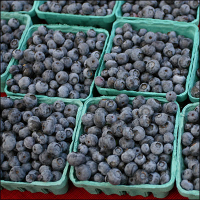
Most notable is the revelation by "Health Ranger" Mike Adams that several foods purporting to contain blueberries actually do not contain actual, whole blueberries. For example, Kellogg's Frosted Mini Wheats really only contains "blueberry flavored crunchlets" made from sugar, soybean oil, red #40, and blue #2. General Mills' Total Blueberry Pomegranate cereal is a double whammy: apparently no actual blueberries or pomegranates. This has been getting considerable attention in the media and among health advocates, both attacking various food manufacturers and the FDA for having loose regulations that allow for the loopholes. This also does not help the already negative public relations that Kellogg and General Mills have received in recent years over their labeling practices and nutritional quality.

Competitors have been quick to point out that use actual blueberries. Me & Goji tweeted Thursday that "While the cereal giants use fake blueberries, ours are all natural from Bar Harbor, Maine". This is certainly an opportunity for the upstarts and natural cereal companies to differentiate themselves.

In a related story, Post recently released a press release highlighting the fact that they "say 'no' to fake fibers that are often found in so-called “healthy” competitive cereals", and that Post uses only whole grain fibers, not the highly processed, novel fibers that other companies use.

It's getting nasty out there, all playing on the growing health concerns of consumers.

Technorati Tags: , , , , , ,

Wednesday, September 29, 2010

Marshmallows

A common adjunct to many sweetened cereals are small marshmallows. For many years these have been added and have now become a mainstay for many brands. To some they add delightful and unique texture, color and flavor. To others they are disgusting, especially once soggy.

For those of you who want the little marshmallows but without the cereal, there is a now a company (www.cerealmarshmallows.com) that sells nothing but cereal marshmallows. No cereal. No fiber. No vitamins, minerals, etc. Just the sweet little crispy marshmallows that turn gooey in milk.

A true niche.


Wednesday, March 05, 2008

Chia cereal

Remember Chia pets? The tacky little clay figurines that "grow" are based on the Chia grain, a highly nutritious seed that is high in such things as omega-3 fatty acids and calcium.

Ruth's Hemp Foods of Toronto has introduced Chia Goodness, a blend of chia seeds, shelled hemp seeds, buckwheat, dehydrated apples, almonds, raisins, cinnamon, salt and sugar.

Innovative, but is it too niche to gain traction?


Technorati Tags: , ,

Monday, November 12, 2007

Cereal ingredient trends

According to Productscan, reported in Food Business Review, after blend, oat was the leading flavor in global cereal launches in the past year. Chocolate was next, its popularity I've commented on before. Wheat's popularity is falling.

Technorati Tags: , ,